
Which Doctor Should You See for Low Back Pain? Beyond Muscles and the Spine: Kidney Warning Signs
TL;DR
- For general low back pain, you can start with family medicine, rehabilitation medicine or orthopaedics; with leg numbness, tingling or weakness, a neurosurgery assessment may be needed.
- One-sided flank pain with blood in the urine, fever or abnormal urination should raise the possibility of urinary tract problems such as kidney stones or pyelonephritis.
- Problems controlling the bladder or bowels, numbness in the perineum, rapidly worsening leg weakness or sudden severe abdominal or back pain need emergency care immediately.
- General low back pain without warning signs usually does not need an X-ray or MRI straight away.
- Most low back pain does not need surgery; a doctor can first assess non-surgical options such as rehabilitation and exercise therapy.
Contents
- Which doctor should you see for low back pain? First understand where the pain may come from
- What are the common causes of low back pain?
- Can low back pain be a kidney problem?
- Besides the kidneys, which other conditions can cause low back pain?
- Which doctor should you see for low back pain? Choosing by symptoms
- Which kinds of low back pain are warning signs? Massage or rest alone is not enough
- Does low back pain always need an X-ray or MRI?
- Does low back pain always need surgery? Can rehabilitation come first?
- Why should you pay more attention to your lower back after 50?
- Happy Clinic: a comprehensive assessment of the causes of low back pain and physical function
Which doctor should you see for low back pain? First understand where the pain may come from
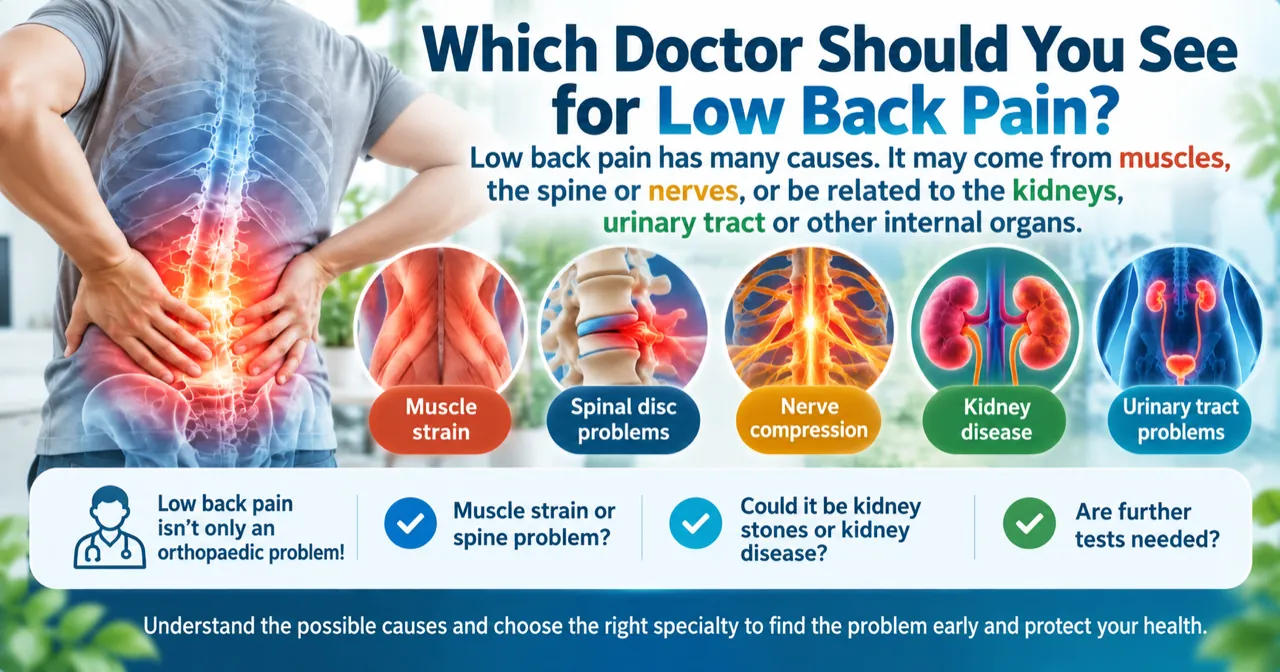
For general low back pain, you can start with family medicine, rehabilitation medicine or orthopaedics; if it comes with abnormal urine, fever or pain on one side of the flank, urinary tract problems should be considered and assessed by the appropriate specialty.
Many people have experienced low back pain.
Some people suddenly strain their back after lifting something heavy, some feel stiff after sitting for a long time, and some wake up with an aching back, with pain that may even spread to the buttocks or legs.
We often put low back pain down to ageing, poor posture or spinal degeneration, but in fact the area around the lower back contains not only muscles and bones, but also nerves, the kidneys and other organs.
So the really important question with low back pain is not "Should I get a massage first?", but:
Where exactly is this pain coming from, and is there a condition that needs to be dealt with early?
What are the common causes of low back pain?
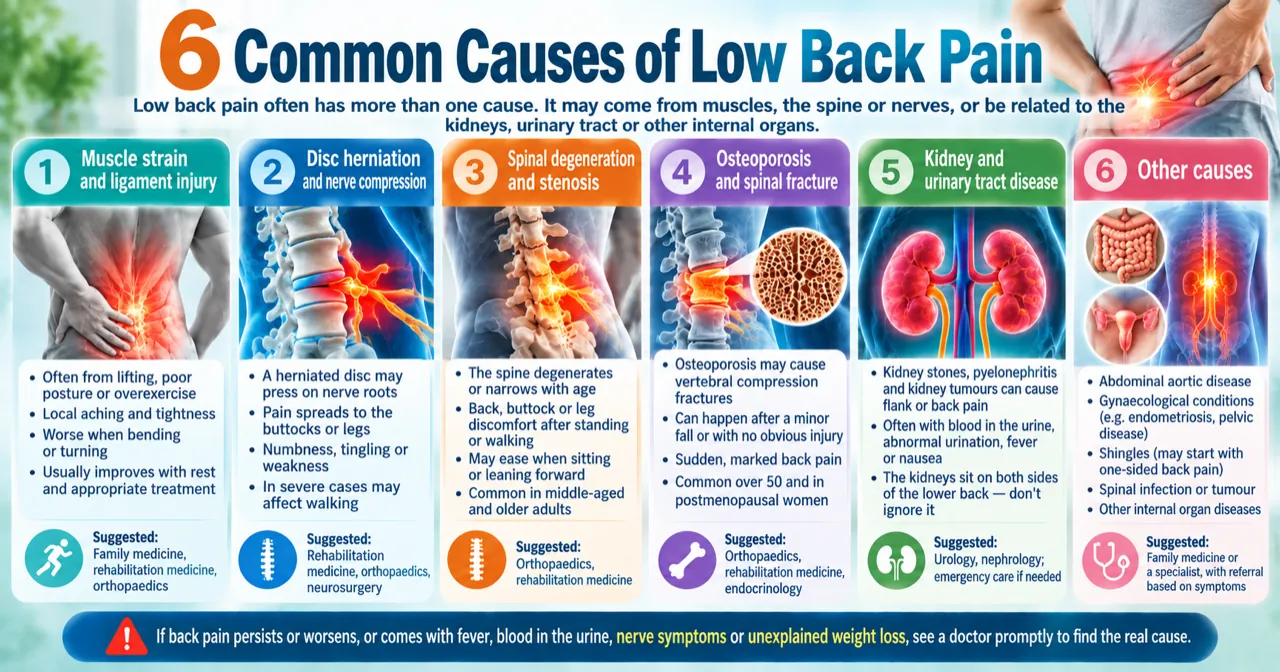
Low back pain has many causes. Most are musculoskeletal problems, but other conditions still need attention.
1. Muscle strain and ligament injury
This is one of the common causes of low back pain.
Lifting heavy objects, twisting the body suddenly, overexercising or holding the same posture for a long time can all cause discomfort in the muscles and soft tissues of the lower back.
Common signs include:
- Aching or tightness in the lower back
- Pain that worsens when bending or turning
- Local muscle tenderness
- Gradual improvement with rest and adjusted activity
If the pain persists or affects daily life, a medical assessment is still recommended.
2. Lumbar disc herniation and nerve compression
If low back pain comes with pain, numbness or tingling in the buttocks or legs, or even reduced muscle strength, you need to consider whether a nerve is being irritated or compressed.
A herniated lumbar disc may irritate nearby nerve roots, causing sciatica-related symptoms.
Common signs include:
- Low back pain spreading to the buttocks or legs
- Numbness or tingling in the legs
- Pain that worsens in certain postures
- In severe cases, weakness in the legs
These problems can be assessed by a rehabilitation medicine specialist, orthopaedic surgeon or neurosurgeon as appropriate.
3. Lumbar degeneration and spinal stenosis
With age, the spine may develop degenerative changes.
Some people with lumbar spinal stenosis feel discomfort in the lower back, buttocks or legs after standing or walking for a while, which may ease when they sit down or lean slightly forward.
But degeneration seen on imaging does not necessarily mean it is causing the pain; this still has to be judged together with symptoms and physical examination.
4. Osteoporosis and vertebral compression fractures
People over 50, especially postmenopausal women and those at high risk of osteoporosis, need to be aware of the possibility of a spinal fracture.
Some people develop sudden, marked back or low back pain after a minor fall, lifting something, or even without any obvious injury.
If a fracture is suspected, seek medical care early, and avoid strong massage or spinal manipulation.
5. Inflammatory spinal disease
Some low back pain is related to inflammatory diseases, such as axial spondyloarthritis.
This type of pain may have the following features:
- More pronounced morning stiffness
- Not necessarily improving with rest
- Possibly feeling better after activity
- Pain that keeps recurring
If you have these symptoms, a doctor may consider referring you to rheumatology for further assessment.
Can low back pain be a kidney problem?
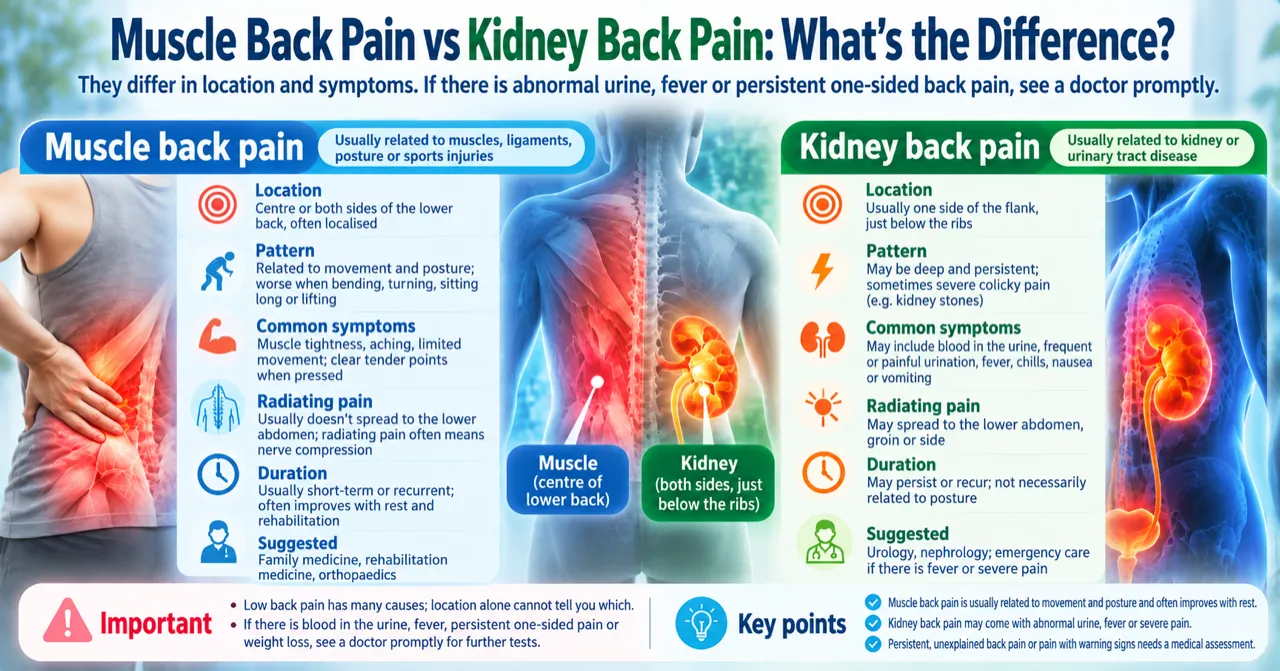
It can. The kidneys sit on either side of the back, near the lower ribs, so some kidney and urinary tract diseases can cause flank or back pain.
But kidney pain is not quite the same as ordinary lower back muscle pain.
Kidney-related pain is often in the flank or below the ribs, and sometimes comes with abnormal urine, fever or other symptoms.
1. Kidney stones
Kidney stones can cause sudden, severe pain on one side of the flank, which sometimes spreads to the lower abdomen or groin.
Some people may also have:
- Blood in the urine
- Nausea and vomiting
- Discomfort when urinating
- Restlessness, unable to sit or lie still
If the pain is severe, or comes with fever or an inability to pass urine, seek medical care immediately.
2. Pyelonephritis
Pyelonephritis is a type of kidney infection. It may cause flank pain, fever, chills, nausea, and symptoms such as frequent or painful urination.
If a kidney infection is suspected, seek medical care as soon as possible to avoid delaying treatment.
3. Kidney tumours
A small number of cases of flank pain may be related to a kidney tumour, but low back pain should not be regarded directly as a sign of kidney cancer.
Early kidney cancer may have no obvious symptoms, and some cases are discovered incidentally during other tests.
Some people may have blood in the urine, persistent pain on one side of the flank, or unexplained weight loss.
If low back pain persists without a clear cause, especially with blood in the urine or other abnormal symptoms, a doctor should assess whether a urine test or imaging is needed.
What matters is this: don't ignore persistent warning signs just because low back pain is common, and don't assume you might have cancer because of a single episode of back pain.
Besides the kidneys, which other conditions can cause low back pain?
Low back or back pain can sometimes also be related to other organs and conditions.
For example:
Abdominal aortic disease
A small number of serious vascular conditions can cause sudden, severe abdominal or back pain. If this comes with fainting, cold sweats or marked weakness, go to the emergency department immediately.
Gynaecological conditions
Some gynaecological problems, such as endometriosis or pelvic disease, may come with lower abdominal and lower back pain.
Shingles
Shingles sometimes starts with burning or stinging pain on one side, with a rash or blisters appearing only a few days later.
Spinal infection or tumour-related conditions
Although relatively uncommon, if there is a history of cancer, steadily worsening pain, fever or other whole-body symptoms, a doctor needs to rule out more serious causes.
Which doctor should you see for low back pain? Choosing by symptoms
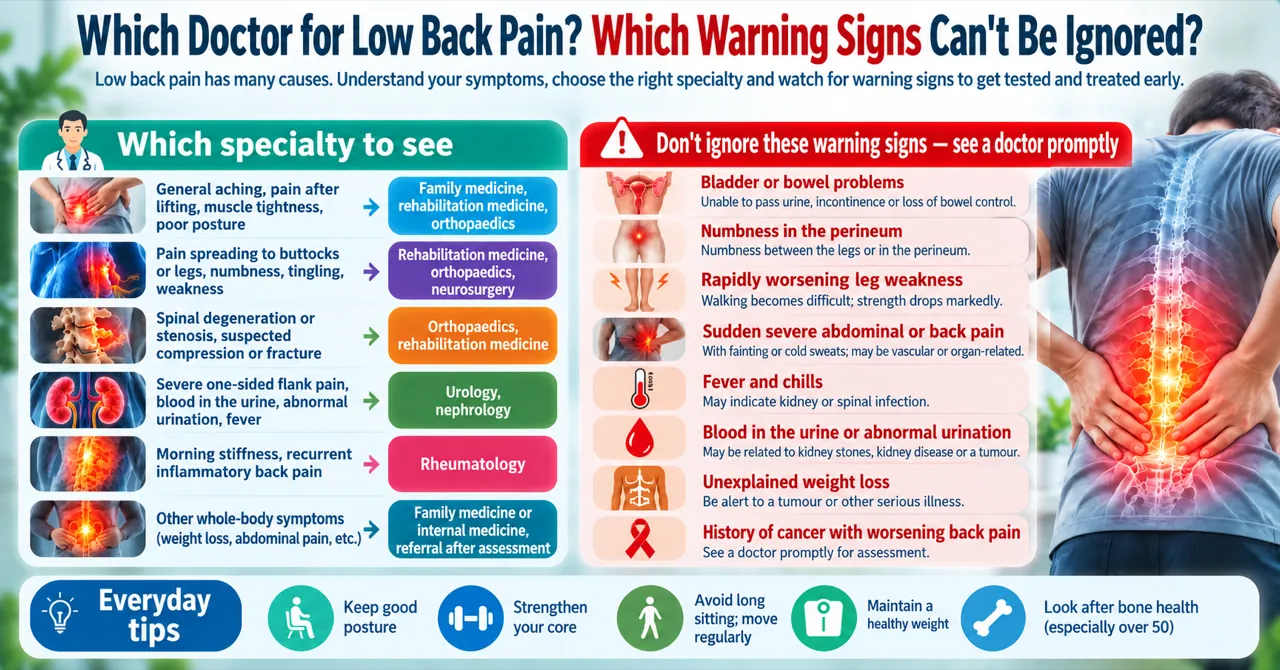
| Type of low back pain | Specialties to consider first |
|---|---|
| General aching, pain after lifting, muscle tightness | Family medicine, rehabilitation medicine, orthopaedics |
| Pain spreading to the legs, with numbness or tingling | Rehabilitation medicine, orthopaedics, neurosurgery |
| Suspected spinal degeneration, fracture or osteoporosis | Orthopaedics, rehabilitation medicine |
| Severe one-sided flank pain, blood in the urine, abnormal urination | Urology; emergency department if severe |
| Flank pain with fever and chills | Seek care the same day; emergency department if needed |
| Morning stiffness, recurrent inflammatory back pain | Rheumatology |
| Unclear cause, with other whole-body symptoms | Family medicine or general internal medicine, with referral after assessment |
If you are not sure what the cause might be, starting with an initial assessment in family medicine is also a reasonable choice.
Which kinds of low back pain are warning signs? Massage or rest alone is not enough
Most low back pain does not need urgent treatment, but some symptoms may point to nerve problems, infection, fracture or other serious conditions and require prompt medical care.
Go to the emergency department immediately if:
- Low back pain comes with new difficulty passing urine, urinary incontinence or loss of bowel control
- There is numbness in the perineum or between the legs
- Leg weakness is getting rapidly worse
- There is sudden, severe abdominal or back pain with fainting or cold sweats
- There is marked back pain after a serious injury
Arrange a medical assessment as soon as possible if:
- Low back pain comes with fever or chills
- There is blood in the urine or other obvious urinary abnormalities
- There is unexplained weight loss
- You have a history of cancer and develop new or worsening low back pain
- The pain keeps getting worse, or affects sleep and daily life
- Someone at high risk of osteoporosis suddenly develops marked back pain
When these warning signs appear, you should not rely only on painkillers, massage or self-care.
Does low back pain always need an X-ray or MRI?
Not necessarily. General low back pain without warning signs usually does not need an X-ray or MRI straight away.
A doctor will first find out:
- Where the pain is and how long it has lasted
- Whether it is related to movement or posture
- Whether there is leg numbness or reduced muscle strength
- Whether there is fever, blood in the urine or other symptoms
- Whether there is a relevant history such as cancer or osteoporosis
Imaging or other tests are then arranged if needed.
If kidney or urinary tract disease is suspected, a doctor may arrange urine tests, kidney function tests, ultrasound or other imaging as appropriate.
Tests should be chosen according to actual clinical need; not every patient with low back pain needs the same tests.
Does low back pain always need surgery? Can rehabilitation come first?
Not all low back pain needs surgery. For most low back pain without serious nerve damage or another specific cause, a doctor can first assess non-surgical treatment options.
Depending on the cause and individual circumstances, these may include:
- Adjusting daily activities and working posture
- Appropriate exercise and core muscle training
- Physiotherapy and rehabilitation
- Medication when necessary
- Weight and lifestyle management
Some people can improve their symptoms through appropriate rehabilitation and activity adjustments.
However, if there is progressive loss of nerve function, severe nerve compression or another condition that requires surgery, specialist assessment should not be delayed.
Spinal traction or manual therapy is also not suitable for every patient with low back pain; fractures, infection, tumours and other problems should be ruled out first before discussing whether it is appropriate.
Why should you pay more attention to your lower back after 50?
After 50, muscle strength, bone density and spinal function may gradually change, so low back pain is not just a matter of pain relief; overall physical function also needs to be considered.
Common health management priorities include:
Maintaining muscle strength
Appropriate strength training for the core, hips and lower limbs helps maintain body stability and the ability to carry out daily activities.
Paying attention to bone health
Postmenopausal women in particular, and anyone with a history of fractures or other risk factors for osteoporosis, can discuss with a doctor whether a bone density assessment is needed.
Avoiding long periods of sitting
Get up and move regularly, adjust your posture, and keep an appropriate level of physical activity.
Managing weight and chronic conditions
Appropriate weight management and care for chronic conditions help maintain overall health.
Not ignoring persistent pain
If low back pain keeps coming back, or affects walking or daily life, the cause should be understood first before choosing the appropriate approach.
Happy Clinic: a comprehensive assessment of the causes of low back pain and physical function
Health management for low back pain should start with understanding the cause of the pain and your physical function, not just focusing on where it hurts.
Happy Clinic focuses on preventive medicine, personalised health management, and health assessment related to bones, joints, the spine and pain.
People with recurrent low back pain, limited physical activity or an interest in their bone and joint health can start with a medical consultation to find out whether further functional assessment, rehabilitation or specialist testing is needed.
If kidney, nerve or other internal organ disease is suspected, appropriate medical diagnosis and any necessary referral should take priority.
Low back pain is not necessarily a sign of ageing, and it does not necessarily need surgery. Find the cause first, then choose the health management approach that suits you.
Medical note: This article provides general health education information and cannot replace a doctor's diagnosis and treatment. If you have problems controlling your bladder or bowels, numbness in the perineum, rapidly worsening leg weakness, or sudden severe abdominal or back pain, seek medical care immediately.
FAQ
Should I see orthopaedics, rehabilitation medicine or neurosurgery for low back pain?
For general musculoskeletal low back pain, you can start with family medicine, rehabilitation medicine or orthopaedics. If it comes with leg numbness, radiating pain or reduced muscle strength, a doctor may assess whether specialist care such as neurosurgery is needed.
How can I tell whether low back pain is a kidney problem or a muscle problem?
Musculoskeletal pain is often related to movement or posture; kidney-related pain may be on one side of the flank or below the ribs and come with blood in the urine, fever, chills or abnormal urination. But the location of the pain alone cannot confirm a diagnosis, and a doctor still needs to assess it.
Could low back pain be kidney cancer?
In rare cases it could, but most low back pain is not caused by cancer. Early kidney cancer may also have no obvious symptoms. If you have persistent pain on one side of the flank, especially with blood in the urine or unexplained weight loss, seek medical care early.
When does low back pain need immediate medical care?
Go to the emergency department immediately if low back pain comes with new problems controlling your bladder or bowels, numbness in the perineum, rapidly worsening leg weakness, or sudden severe abdominal or back pain with fainting. Fever, blood in the urine or steadily worsening pain should also be assessed as soon as possible.
Does low back pain always need surgery? Can rehabilitation help?
Most low back pain does not need surgery. A doctor will assess exercise therapy, physiotherapy, medication or other options depending on the cause and severity. If there is serious or worsening loss of nerve function, timely specialist assessment is needed.
The discomfort has lasted a while. What should you do next?
Neck, shoulder, back or joint discomfort may have more than one cause. Understanding where it hurts and how you move is the first step in deciding the right care.
- Spinal and posture assessment to understand how you use your body day to day
- A doctor reviews where it hurts, how you move and your individual needs
- A plan for restoring function and adjusting daily habits based on the assessment