
Does Reduced Kidney Function Always Lead to Dialysis?
TL;DR
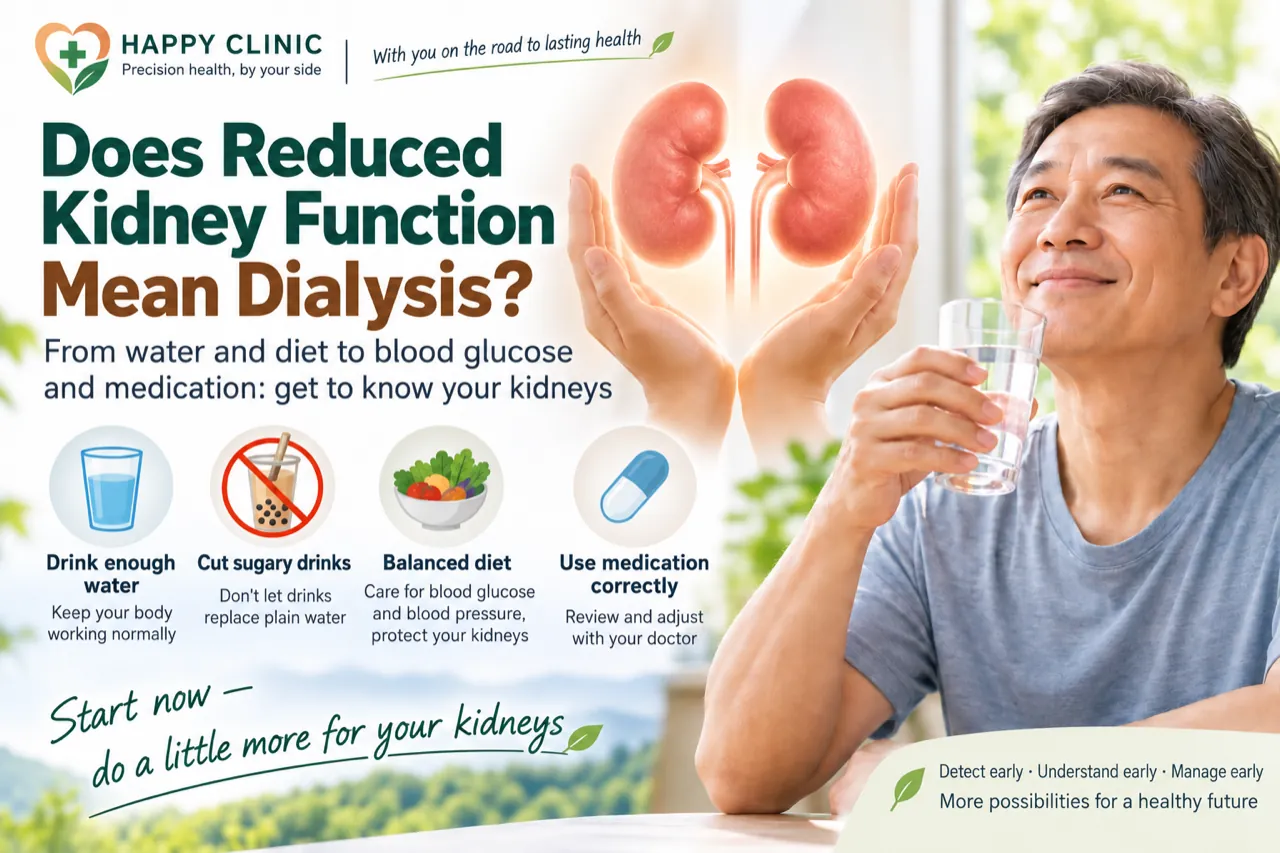
- Reduced kidney function does not necessarily lead to dialysis; chronic kidney disease has different causes, stages and rates of progression.
- A single drop in eGFR cannot on its own establish chronic kidney disease; diagnosis considers whether the abnormality has lasted at least 3 months, together with other evidence of kidney damage.
- Kidney health should be assessed by looking at eGFR, the urine albumin-to-creatinine ratio (uACR), blood pressure, blood glucose and medications together.
- Adequate hydration matters, but it does not mean drinking large amounts of water on your own; some kidney conditions require fluid restriction.
- If kidney function declines, do not stop or reduce medication yourself; any adjustment should be decided by a doctor.
Contents
- A decline in kidney function does not necessarily mean dialysis
- One abnormal kidney function result is not necessarily chronic kidney disease
- Kidney function cannot be judged by a single number
- Lifestyle habits observed at Happy Clinic
- Water matters, but more is not always better
- Not just how much you drink, but what you drink
- Reviewing medications when kidney function declines
- Kidney health: 7 things to look at together
- What to do next if kidney function has declined
- Important note
- References
A decline in kidney function does not necessarily mean dialysis
When a health check-up shows "reduced kidney function", many people immediately think of dialysis. In fact, chronic kidney disease (CKD) has different causes, stages and rates of progression, and the future cannot be judged from a single test result.
Assessing kidney health requires bringing together information such as the estimated glomerular filtration rate (eGFR), urine protein, blood pressure, blood glucose, the underlying cause, medications and long-term changes. What really matters is first understanding why kidney function has changed, and which risk factors deserve further management.
One abnormal kidney function result is not necessarily chronic kidney disease
eGFR is one of the key clinical indicators for assessing the kidneys' filtering function, but a single drop in the value cannot on its own establish chronic kidney disease. Under international CKD guidelines, a diagnosis requires considering whether abnormalities of kidney structure or function have persisted for at least 3 months, together with other evidence of kidney damage.
So when you see a result flagged in red on your report, besides checking your eGFR, you should also find out how long the abnormality has lasted and whether there are other changes such as protein in the urine.
Kidney function cannot be judged by a single number
Besides eGFR, urine protein is also important information, particularly the urine albumin-to-creatinine ratio (uACR). For people at risk of chronic kidney disease, kidney filtration function and urine albumin usually need to be assessed together.
It is also important to understand blood pressure, blood glucose, diet and drinking habits, as well as any prescription medicines, over-the-counter medicines, herbal remedies and supplements currently being taken. Only by putting this information together can the overall picture of kidney health be grasped.
Lifestyle habits observed at Happy Clinic
In Happy Clinic's past health management experience, we have seen some people with abnormal kidney function who actually drank very little plain water day to day, and habitually replaced it with bubble tea, sugary drinks, tea beverages or other drinks.
For this reason, during health management we not only track test results but also look at water intake, diet, blood glucose, blood pressure, lifestyle and medication use. In some people followed over time, after assessment by medical professionals and adjustments to lifestyle and health management, subsequent follow-up showed changes or improvement in some kidney function-related indicators.
These are observations from the clinic's health management practice. They do not mean that all chronic kidney disease can be reversed, nor do they prove that simply drinking more water can improve chronic kidney disease. Every person's causes are different and still need individual assessment.
Water matters, but more is not always better
The body needs adequate fluid to maintain circulation and normal physiological function. Severe water deficiency or dehydration may affect blood flow to the kidneys and kidney function, so maintaining adequate hydration is part of everyday health management.
However, reduced kidney function does not mean you should start drinking large amounts of water on your own. Age, body size, activity level, climate, urine output and medical conditions can all affect how much fluid is appropriate; some people with more severe kidney disease, reduced urine output, oedema or other coexisting conditions may even need to restrict fluid intake.
The point is not "the more the better", but avoiding long-term neglect of fluid intake while assessing an appropriate way of drinking based on your individual health.
Not just how much you drink, but what you drink
Some people take in plenty of fluid each day, but mostly from sugary drinks. Drinking sugary drinks cannot be equated directly with causing kidney disease, but large amounts of sugary drinks are not an ideal everyday source of fluid.
Diabetes, high blood pressure and metabolic problems are all important risk factors for kidney health, so besides how much you drink, it is worth paying attention to the type of drinks, your diet, blood glucose and blood pressure. Abnormal blood lipids often occur alongside these metabolic problems; if your health check-up also flags high cholesterol, you can read what high cholesterol means as well.
Reviewing medications when kidney function declines
When kidney function changes, you should tell your doctor about all prescription medicines, over-the-counter medicines, herbal remedies and supplements you are taking, so the doctor can assess them in light of your kidney function and overall health.
This does not mean you should stop or reduce medication on your own because your kidney function is poor. Some medicines for diabetes, high blood pressure and cardiovascular conditions have medical evidence of kidney or cardiovascular protection in certain patients with chronic kidney disease. Whether any medication needs adjusting should be decided by a doctor based on your individual situation.
Kidney health: 7 things to look at together
When assessing kidney health, the key points can be organised into seven areas: kidney filtration function, urine protein, blood glucose, blood pressure, drinking and dietary habits, medicines and supplements, and long-term changes over time.
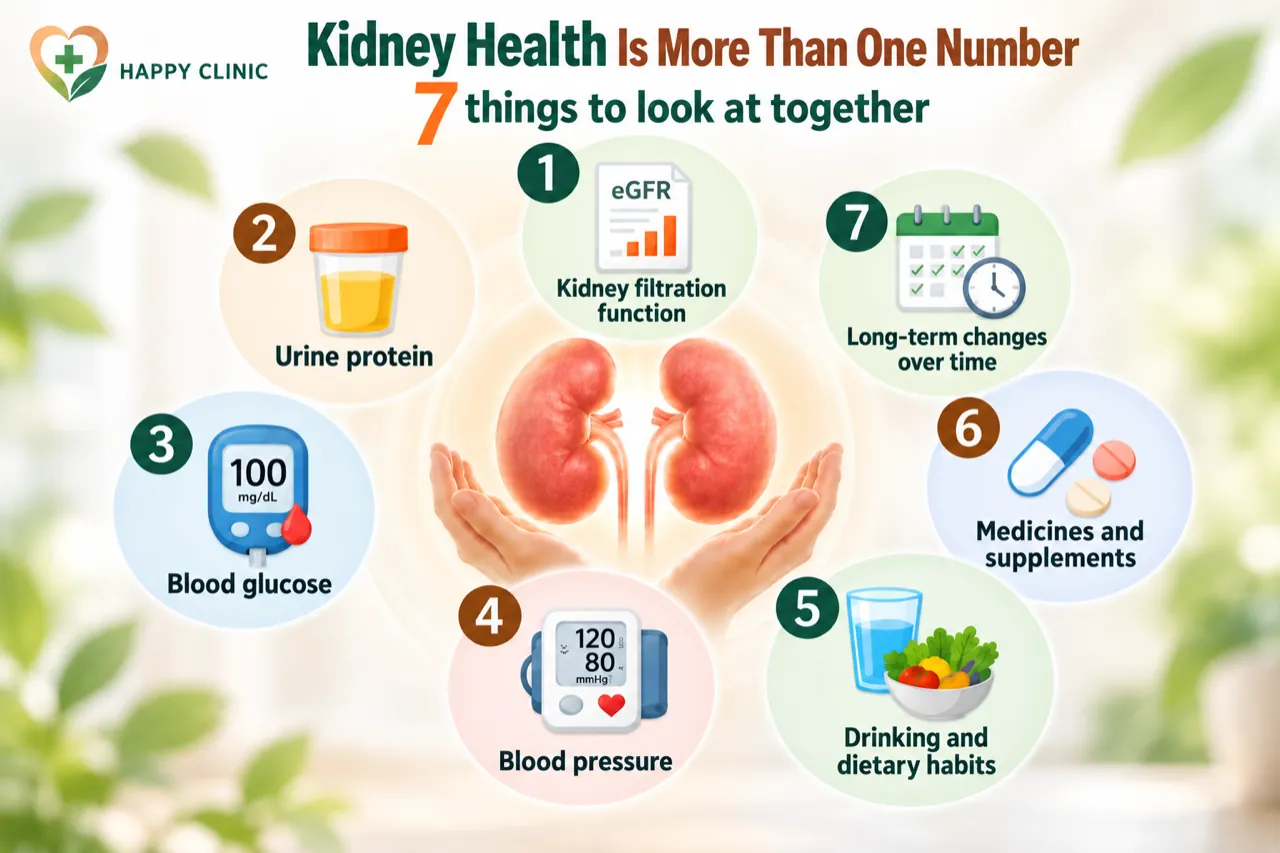
Do not fixate on a single red figure in one blood test report. Following changes over time and understanding the possible causes of an abnormality is what helps you plan a health management approach that suits you.
What to do next if kidney function has declined
If your kidney function has declined, it is not advisable to start drinking large amounts of water on your own, nor to stop or reduce medication by yourself. A more appropriate approach is to look further into your eGFR, urine protein, blood glucose, blood pressure, current medications and lifestyle, and let medical professionals decide whether further tests or a referral to a nephrologist are needed.
Reduced kidney function does not necessarily lead to dialysis. Causes, stages and rates of progression differ from person to person; understanding your body early, managing the risk factors that can be changed and continuing follow-up is the more important direction.
Important note
This article provides general health education information and cannot replace a doctor's diagnosis or individual medical advice. If you already have chronic kidney disease, diabetes, high blood pressure or heart disease, or are taking prescription medication, any changes to fluid intake, diet or medication should be assessed by a doctor based on your individual health. If kidney function remains abnormal or deteriorates rapidly, you should receive appropriate medical assessment and, where necessary, a referral to a nephrologist.
References
- KDIGO 2024 Clinical Practice Guideline for the Evaluation and Management of Chronic Kidney Disease.
- National Kidney Foundation, Healthy Hydration and Your Kidneys.
FAQ
Does one drop in kidney function mean chronic kidney disease?
Not necessarily. Diagnosing chronic kidney disease requires considering whether the abnormality has persisted for at least 3 months and whether there is other evidence of kidney damage. It should be assessed comprehensively by medical professionals.
If my kidney function is poor, will drinking more water help?
It should not be understood that way. Avoiding dehydration is important, but the right amount of fluid varies from person to person; some people with kidney disease, reduced urine output or oedema may even need to restrict fluids.
Can other drinks replace plain water?
Different drinks all provide fluid, but replacing plain water with large amounts of sugary drinks over the long term is not recommended. Drinking and eating habits should still be adjusted according to individual health.
If my kidney function declines, can I reduce my diabetes or blood pressure medication myself?
This is not recommended. Some medicines have evidence of kidney or cardiovascular protection in certain patients with chronic kidney disease. Any adjustment should be assessed by a doctor based on your individual situation.
Want to know how your body is doing right now?
A regular health check-up mostly shows results as numbers. Happy Clinic’s precision health testing looks at your body at the cellular level, as a reference for health management.
- 15 precision health tests covering immune, telomere, mitochondrial and metabolic aspects
- Our professional team compiles the results and explains the next steps for health management
- Whether a test is suitable needs to be assessed by a doctor based on your individual health
More in Health Testing
Keep reading on related topics