
What Are the Symptoms of Chronic Inflammation? Understanding Inflammation, Pain and Health Risks

TL;DR
- Chronic inflammation is an inflammatory response that persists, and it may be related to chronic infection, immune abnormalities, metabolic problems or other diseases.
- Symptoms vary with the cause and the organs involved, and some people have no obvious discomfort; fatigue or aches alone cannot be used to judge it.
- Prostaglandins and cytokines released during inflammation make pain nerves more sensitive, but not all pain is caused by inflammation.
- Long-term inflammation is linked to some cardiovascular diseases, metabolic abnormalities, autoimmune diseases and certain cancers, but it does not mean you will necessarily develop them.
- CRP, ESR and IL-6 cannot on their own determine whether there is chronic inflammation throughout the body; whether to test should be assessed by a doctor.
Contents
- What is chronic inflammation, and how is it different from acute inflammation?
- What are the common symptoms of chronic inflammation?
- Why does inflammation cause pain?
- Which health risks are linked to chronic inflammation?
- How can you tell whether you have chronic inflammation, and which tests are needed?
- How can the health risks related to chronic inflammation be managed in daily life?
- Why should people over 50 pay more attention to chronic inflammation and body pain?
- How does Happy Clinic help you understand inflammation and your health status?
What is chronic inflammation, and how is it different from acute inflammation?
Chronic inflammation is an inflammatory response in the body that persists, and it may be related to chronic infection, immune abnormalities, metabolic problems or other diseases.
Inflammation is originally one of the body's important defence and repair mechanisms. When bacteria or viruses invade, or tissue is damaged, the immune system triggers an inflammatory response to help clear pathogens and damaged tissue.
For example, the redness, swelling, heat and pain after cutting a finger are a common sign of acute inflammation. As the wound heals, the inflammatory response usually subsides.
But if the inflammatory stimulus persists, or immune regulation becomes abnormal, chronic inflammation may develop.
| Comparison | Acute inflammation | Chronic inflammation |
|---|---|---|
| Onset | Usually sudden | May last weeks, months or longer |
| Common causes | Infection, injury, acute tissue damage | Chronic infection, autoimmune disease, metabolic abnormalities, etc. |
| Common signs | Redness, swelling, heat, pain | May have no obvious symptoms, or may come with fatigue or pain |
| Effect on health | Helps the body defend and repair itself | If it persists, it may cause tissue damage |
Chronic inflammation does not necessarily cause obvious symptoms, and whether it is present cannot be judged from body aches or tiredness alone.

What are the common symptoms of chronic inflammation?
The symptoms of chronic inflammation vary with the underlying cause and the organs affected, and some people have no obvious discomfort at all.
The following may occur in some chronic inflammatory diseases, but they are not diagnostically specific.
1. Long-term fatigue and low energy
Some chronic inflammatory diseases may come with fatigue, reduced activity or poor concentration.
But anaemia, thyroid problems, sleep disorders and other health problems can also cause similar symptoms.
2. Joint pain, stiffness or swelling
Some inflammatory joint diseases may cause joint swelling, pain and morning stiffness.
However, joint degeneration and muscle or tendon injuries can also cause pain, so further distinction is needed.
3. Recurrent digestive discomfort
Some inflammatory bowel diseases may come with long-term abdominal pain, diarrhoea, blood in the stool or weight loss.
4. Recurrent skin redness, swelling or itching
Some skin conditions, such as psoriasis and eczema, involve immune and inflammatory responses, but they still need to be judged based on symptoms and test results.
5. Persistent or recurrent pain
If pain does not go away, keeps coming back, or comes with joint swelling, fever or weight loss, a doctor should assess the cause.
Why does inflammation cause pain?
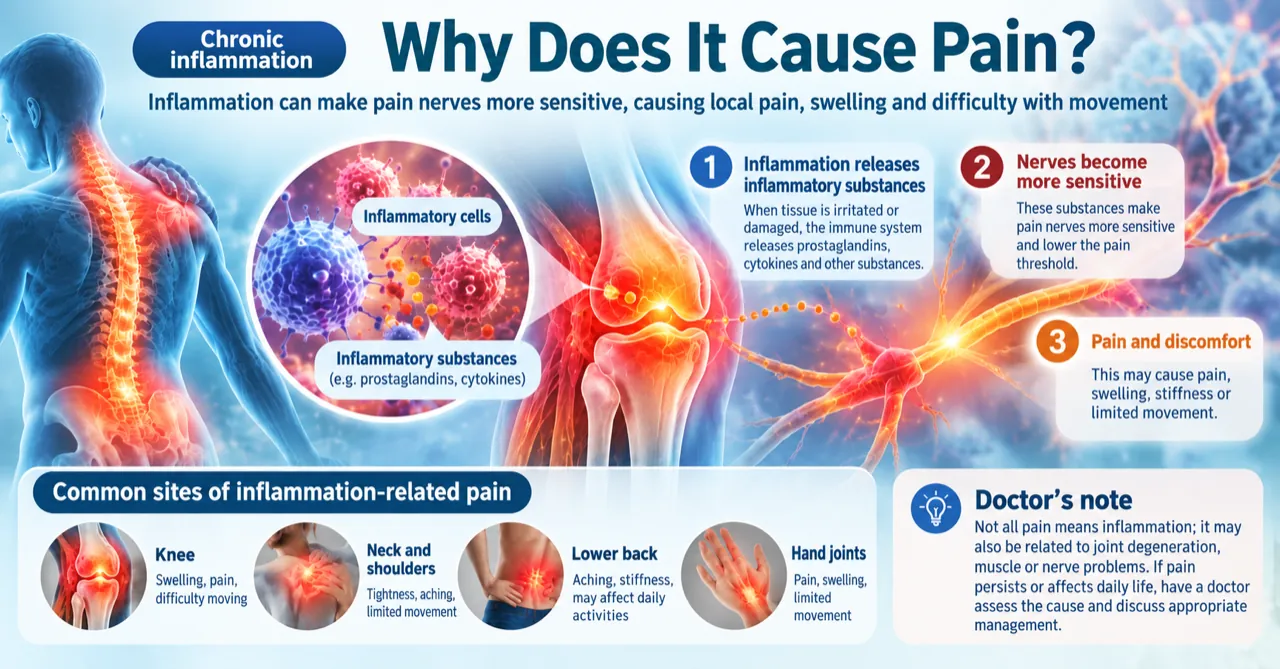
Inflammation can make pain nerves more sensitive, so some inflammatory diseases cause pain, swelling and difficulty with movement.
When body tissue is irritated or damaged, the immune system may release inflammation-related substances such as prostaglandins and cytokines.
These substances may make pain nerves more sensitive, causing local pain, stiffness or swelling.
For example, knee pain may involve inflammation of the joint synovium, degenerative changes or other tissue problems; neck, shoulder and lower back pain may be related to muscle, joint or nerve problems.
So not all pain means the body is inflamed.
When pain persists, the cause should be identified first, and a doctor can then assess the appropriate way to manage it.
Which health risks are linked to chronic inflammation?
Long-term inflammation is linked to the development or progression of some chronic diseases, but inflammation does not mean you will necessarily develop these diseases.
Common related health problems include:
Cardiovascular disease
Chronic inflammation is involved in the formation and progression of atherosclerosis, and may be related to the risk of some cardiovascular diseases.
Type 2 diabetes and metabolic abnormalities
Low-grade chronic inflammation associated with obesity may be related to insulin resistance and metabolic abnormalities.
Autoimmune diseases
In some autoimmune diseases, an abnormal immune response causes persistent inflammation of the joints, skin or other organs.
Some cancers
Some long-term inflammatory states may increase the risk of certain cancers, but chronic inflammation cannot be equated directly with cancer.
Some chronic organ diseases
Persistent inflammation may also be involved in the development of liver, bowel and other organ diseases.
Actual health risk still needs to be assessed by considering age, family history, lifestyle, existing conditions and other factors together.
How can you tell whether you have chronic inflammation, and which tests are needed?
Chronic inflammation cannot be judged from symptoms alone, and no single blood marker can fully represent the inflammatory state of the whole body.
Doctors usually assess whether there is an inflammatory disease based on medical history, symptoms, physical examination and any necessary tests.
C-reactive protein (CRP)
CRP is a common inflammation-related laboratory marker.
Infection, tissue damage and some inflammatory diseases can all raise CRP, but CRP alone cannot confirm where the inflammation is or what is causing it.
Erythrocyte sedimentation rate (ESR)
ESR can be used as a supporting marker in assessing some inflammatory diseases.
But ESR can also be affected by age, anaemia and other factors, so it must be interpreted alongside the clinical picture.
Interleukin-6 (IL-6)
IL-6 is a cytokine involved in immune and inflammatory responses.
Some infections, immune responses and other diseases may come with changes in IL-6 levels.
However, IL-6 is not a necessary part of routine health screening for the general public, and chronic inflammation, cancer or any other specific disease cannot be diagnosed from whether the value is high or low.
Whether IL-6 testing is needed should be assessed by a doctor based on individual health.
How can the health risks related to chronic inflammation be managed in daily life?
A balanced diet, regular exercise, weight management, good sleep and stopping smoking help maintain overall health and lower the risk of some chronic diseases.
1. A balanced diet
Eat moderate amounts of vegetables, fruit, whole grains, legumes, fish and nuts, and cut down on excess refined sugar and highly processed foods.
2. Maintaining a healthy weight
Excess visceral fat may be linked to low-grade chronic inflammation and metabolic abnormalities.
Weight management should balance nutrition and muscle maintenance, rather than relying on dieting alone.
3. Regular exercise
Aerobic exercise and strength training arranged according to individual health help maintain cardiovascular, muscle and metabolic function.
4. Prioritising sleep quality
Long-term lack of sleep may affect immune regulation and metabolic function. Adults are generally advised to sleep about 7 to 9 hours a night, although individual needs vary.
5. Managing stress and avoiding smoking
Long-term stress may affect sleep and lifestyle habits, and stopping smoking helps lower the risk of many chronic diseases.
If you have already been diagnosed with an inflammatory disease, you should still follow your doctor's advice and receive appropriate treatment; lifestyle changes should not replace necessary medical care.

Why should people over 50 pay more attention to chronic inflammation and body pain?
After 50, the likelihood of chronic disease, joint degeneration, muscle loss and metabolic abnormalities may increase, so persistent pain or fatigue deserves further assessment.
With age, some people may gradually develop limited joint movement, reduced muscle strength, changes in sleep quality or metabolic problems.
These changes are not necessarily caused by chronic inflammation, nor should they all be put down to normal ageing.
A health assessment can start with the following questions:
- Is the pain related to joints, muscles, nerves or an inflammatory disease?
- Are there abnormalities in blood glucose, blood lipids or other metabolic measures?
- Do nutrition, sleep and exercise habits need adjusting?
- Is further testing or specialist assessment needed?
Appropriate medical assessment and follow-up health management help you understand your individual health status and risk factors.
How does Happy Clinic help you understand inflammation and your health status?
Happy Clinic focuses on preventive medicine, precision health testing and personalised health management, with an emphasis on appropriate assessment based on individual needs.
For people with long-term fatigue, recurrent pain or concerns about inflammation in the body, health management can start with understanding personal medical history, lifestyle, nutrition, metabolism and related health risks.
Where necessary, a doctor assesses whether related tests should be arranged based on the individual's situation, and discusses the direction of follow-up health management.
The value of testing does not lie in having as many tests as possible, but in choosing assessment methods that suit the individual and correctly understanding the results and their limitations.
Persistent pain and fatigue can have many causes, and finding the cause is an important starting point for health management.
Medical note: This article provides general health education information and cannot replace a doctor's diagnosis and treatment. If you have persistent fever, severe pain, obvious joint redness and swelling, chest pain, difficulty breathing or other acute symptoms, seek medical care promptly.
FAQ
What are the common symptoms of chronic inflammation?
Chronic inflammation sometimes has no obvious symptoms; some inflammatory diseases may come with fatigue, joint pain, swelling or other discomfort. But these symptoms can also be caused by other conditions, so chronic inflammation cannot be determined from symptoms alone.
Why does inflammation cause pain?
During inflammation, the body may release prostaglandins and cytokines that make pain nerves more sensitive, causing pain, swelling or stiffness. However, muscle, joint and nerve problems can also cause pain, and not all pain is related to inflammation.
What health problems can chronic inflammation cause?
Long-term inflammation is linked to the development or progression of some cardiovascular diseases, metabolic abnormalities, autoimmune diseases and certain cancers. But having chronic inflammation does not mean you will necessarily develop these diseases; actual risk needs to be assessed based on individual health.
How can I tell whether I have chronic inflammation? Do I need a blood test?
A doctor will decide whether CRP, ESR or other related tests are needed based on medical history, symptoms and physical examination. No single blood marker can fully determine whether there is chronic inflammation throughout the body.
What does a raised IL-6 level mean?
IL-6 is a cytokine involved in immune and inflammatory responses. Infection, immune responses and other factors can all affect IL-6 levels. A single raised IL-6 result cannot directly determine how severe chronic inflammation is, nor can it be used on its own to diagnose cancer or any other specific disease; it should be interpreted by a doctor in context.
Want to know how your body is doing right now?
A regular health check-up mostly shows results as numbers. Happy Clinic’s precision health testing looks at your body at the cellular level, as a reference for health management.
- 15 precision health tests covering immune, telomere, mitochondrial and metabolic aspects
- Our professional team compiles the results and explains the next steps for health management
- Whether a test is suitable needs to be assessed by a doctor based on your individual health
More in Health Testing
Keep reading on related topics