
Diagnosed with Cancer: What Should You Do Next? A Guide to Tests, Treatment Options and Immune Cell Testing After a Cancer Diagnosis
TL;DR
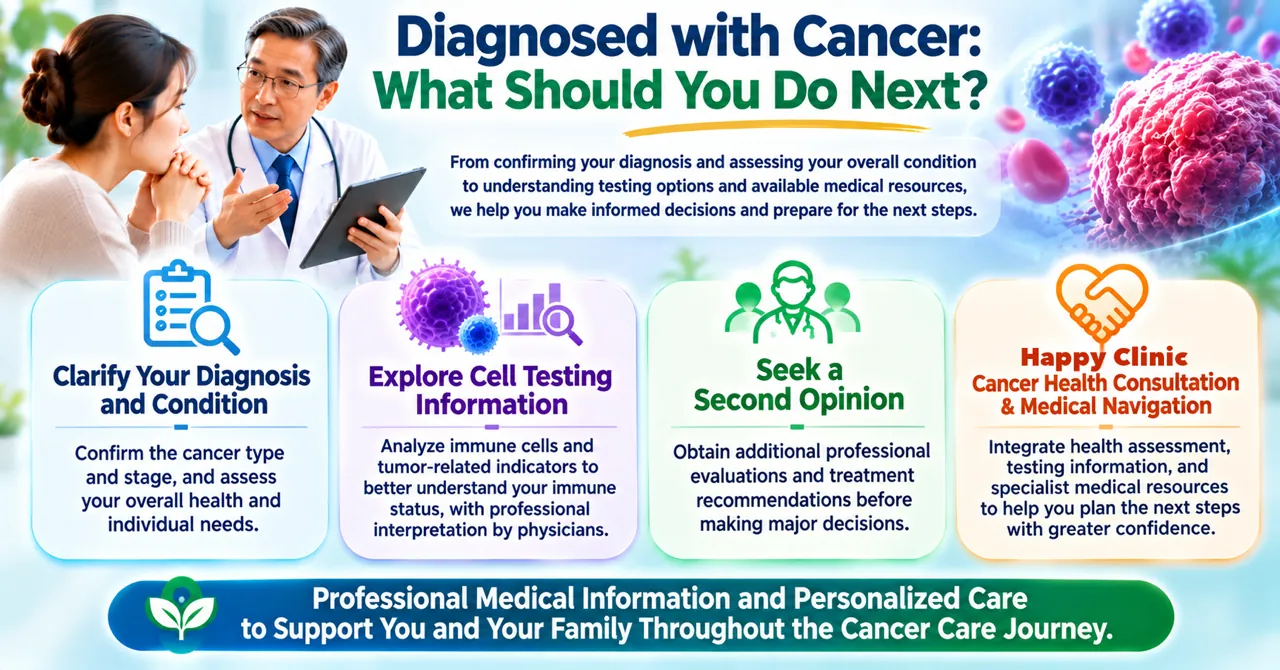
- After a cancer diagnosis, first confirm the diagnosis, understand the type of cancer and the extent of the disease, and have a cancer specialist assess the treatment direction; you can seek a second opinion when needed, but urgent treatment must not be delayed.
- Haematological malignancies mainly arise in the blood, bone marrow or lymphatic system, while solid tumours mostly arise in organs or tissues; the two may differ in diagnostic methods, disease classification and treatment strategy.
- Cancer treatment includes surgery, chemotherapy, radiotherapy, targeted therapy, immunotherapy, and cell therapy for specific cancers; the actual choice should be assessed by a specialist based on your individual condition.
- Immune cell testing can analyse specific cell populations and related markers, but it cannot replace pathological diagnosis of cancer, staging, necessary molecular testing or standard assessment of treatment response.
- Some cell therapies such as CAR-T and TIL have been approved for specific cancers, but many applications are still in the research stage; whether they are suitable depends on the disease, the approved indications and a doctor's assessment.
Contents
- The doctor has told me I have cancer. What should I do next?
- What is the difference between haematological malignancies and solid tumours?
- What are the five most important steps after a cancer diagnosis?
- Which doctor should you see for cancer? How do you find the right doctor?
- What are the main cancer treatments available today?
- Why are cancer patients interested in immune cells?
- What can immune cell testing help cancer patients understand?
- How is tumour cell testing different from cancer stem cell testing?
- Are regenerative medicine and immune cell therapy new options for cancer?
- Do you need a second opinion after a cancer diagnosis?
- Can cancer patients take part in clinical trials?
- How can Happy Clinic help cancer patients understand cell testing and medical resources?
- After a cancer diagnosis, which situations need immediate medical attention?
- What matters most after a cancer diagnosis?
The doctor has told me I have cancer. What should I do next?
When a doctor tells you that you have cancer, first confirm the diagnosis, understand the type of cancer and the extent of the disease, and have a cancer specialist assess the treatment direction. When needed, you can also seek a second opinion to learn about other suitable medical options.
"The doctor says I have cancer. What should I do next?"
This may be the question cancer patients and their families most want answered, and also the hardest one to answer straight away.
Some people find a tumour during a health check; others see a doctor because of long-term fatigue, pain, weight loss or other physical changes, and only then learn they may have cancer.
Faced with a sudden diagnosis, patients may feel shocked and anxious, and may not even know which tests to have first, which specialty to see, or whether they need treatment immediately.
But cancer is not a single disease.
The pathological type, stage and molecular features of each cancer, as well as the patient's physical condition, all affect the treatment plan.
So after a diagnosis there is no need to rush into choosing a particular treatment on your own; instead, first get a clear picture of your own disease and discuss the next steps with a specialist medical team.
What is the difference between haematological malignancies and solid tumours?
Haematological malignancies mainly arise in the blood, bone marrow or lymphatic system; solid tumours mostly arise in organs or tissues. The two may differ in diagnostic methods, disease classification and treatment strategy.
What are the haematological malignancies?
Common haematological malignancies include:
- Leukaemia
- Lymphoma
- Multiple myeloma
Patients may have symptoms such as fatigue, anaemia, fever, easy bruising, recurrent infections or swollen lymph nodes.
Some haematological malignancies need to be diagnosed and classified using blood tests, bone marrow examination, pathological analysis, flow cytometry and molecular testing.
What are the solid tumours?
Common solid tumours include:
- Lung cancer
- Breast cancer
- Liver cancer
- Colorectal cancer
- Stomach cancer
- Head and neck cancer
- Kidney cancer
Solid tumours usually need a combination of imaging, biopsy and other tests to assess the tumour type, how far it has spread locally and whether it has metastasised.
Haematological malignancies vs solid tumours
| Comparison | Haematological malignancies | Solid tumours |
|---|---|---|
| Common types | Leukaemia, lymphoma, multiple myeloma | Lung, breast, liver, colorectal cancer, etc. |
| Main diagnostic methods | Blood, bone marrow, pathological and molecular tests | Pathological, imaging and molecular tests |
| Specialties commonly seen | Haematology, haematology-oncology | Medical oncology, relevant surgical and organ specialties |
| Treatment planning | Based on disease classification and risk stratification | Based on cancer type, stage and biomarkers |
Not all haematological malignancies use stage I to stage IV staging, and not all solid tumours are suited to the same treatment.
What are the five most important steps after a cancer diagnosis?
The five important steps after a cancer diagnosis are confirming the diagnosis, assessing the extent of the disease, drawing up a treatment plan, understanding the necessary tests, and arranging follow-up care.
Step 1: Confirm the cancer diagnosis
First find out whether the doctor's current judgement is suspected cancer, or whether pathological or other evidence sufficient for a diagnosis has already been obtained.
If a mass has only been found on imaging, that does not necessarily mean a malignant tumour has been diagnosed.
Different cancers may require a biopsy, blood tests, bone marrow examination or other specialised tests.
Step 2: Understand the cancer stage and extent of the disease
Cancer staging or risk classification can help a doctor assess how advanced the disease is and the direction of treatment.
Some solid tumours use the TNM staging system; different haematological malignancies may use other classification and prognostic assessment methods.
Patients can ask their doctor:
"What type of cancer do I have? How far has the disease spread so far? What other tests do I need?"
Step 3: Discuss a treatment plan with a specialist
The treatment plan needs to be decided based on the type of cancer, the stage, the patient's physical condition and the goals of treatment.
Some patients may need surgery, while others may be suited to drug treatment, radiotherapy or a combination of approaches.
What matters is understanding the purpose, possible benefits, risks and expected timeline of each treatment.
Step 4: Find out whether further testing is needed
Some cancers require specific molecular or biomarker testing to help the doctor choose a treatment.
Immune cell analysis, tumour-related cell testing and mitochondria-related research also belong to different fields of cell medicine.
But each test answers a different question, and they cannot replace one another.
Step 5: Plan follow-up care and health management
Besides receiving professional treatment, cancer patients should also pay attention to nutrition, physical strength, sleep, pain control, psychological support and quality of life.
Appropriate supportive care can take place alongside cancer treatment.
Which doctor should you see for cancer? How do you find the right doctor?
For cancer, seek the specialty that matches the type of disease. Haematological malignancies are usually assessed by haematology or haematology-oncology, while solid tumours may need shared care from medical oncology, the relevant surgical specialties and other specialties.
| Condition or need | Suggested specialty |
|---|---|
| Leukaemia, lymphoma, myeloma | Haematology, haematology-oncology |
| Lung cancer | Pulmonology, thoracic surgery, medical oncology |
| Breast cancer | Breast surgery, medical oncology |
| Liver cancer | Gastroenterology and hepatology, hepatobiliary surgery and related teams |
| Colorectal cancer | Colorectal surgery, medical oncology |
| Kidney cancer | Urology, medical oncology |
| Radiotherapy assessment | Radiation oncology |
| Cancer pain and symptom control | Palliative care, pain medicine teams |
| Second opinion | Another specialist in the same disease area |
Some cancers need discussion by a multidisciplinary team, and patients can ask whether the hospital offers integrated cancer care.
What are the main cancer treatments available today?
Cancer treatment includes surgery, chemotherapy, radiotherapy, targeted therapy, immunotherapy, and cell therapy for specific cancers. The actual choice should be assessed by a specialist based on your individual condition.
Surgery
Some localised solid tumours can be removed surgically.
Whether surgery is suitable depends on where the tumour is, the extent of the disease and the patient's overall health.
Chemotherapy
Chemotherapy uses anti-cancer drugs to control or destroy cancer cells, and may be used alone or combined with other treatments.
Radiotherapy
Radiotherapy uses high-energy radiation to control or destroy cancer cells, and depending on the disease it can be used for curative treatment or symptom relief.
Targeted therapy
Some cancers have specific molecular abnormalities, and a doctor can use validated biomarker testing to assess whether a suitable targeted drug is available.
Immunotherapy
Immunotherapy fights cancer by modulating the immune system.
Some immune checkpoint inhibitors act on related pathways such as PD-1 or PD-L1, but they are not suitable for every cancer patient.
Cell therapy
Some cell therapies have been approved for specific cancers, while other technologies are still at the clinical research stage.
Patients should check the treatment's approval status, indications, possible side effects and the qualifications of the medical institution.
Why are cancer patients interested in immune cells?
Immune cells take part in the body's process of recognising and responding to abnormal cells, and they are also an important subject of cancer immunology and cell therapy research.
The human immune system contains many kinds of cells, each with a different function.
CD8 T cells
Some CD8 T cells can recognise and kill abnormal cells, and they are an important cell population in tumour immunology research.
CD4 T cells
CD4 T cells help coordinate and regulate immune responses, and different CD4 cell subsets have different functions.
Regulatory T cells (Treg)
Tregs are mainly involved in immune tolerance and the regulation of immune responses.
In the tumour microenvironment, some Treg-related mechanisms may affect the anti-tumour immune response, but their role needs to be judged according to the disease and research context.
NK (natural killer) cells
NK cells are an important part of the innate immune system and can take part in immune responses against some abnormal cells.
B cells
B cells take part in antibody-related immune responses and are also relevant to the classification and testing of some haematological malignancies.
The number, proportion and function of immune cells are not the same thing.
So you cannot judge whether cancer is getting worse, or conclude that a patient has enough ability to fight cancer, based only on the proportion of one type of immune cell being high or low.
What can immune cell testing help cancer patients understand?
Immune cell testing can analyse specific cell populations and related markers, but whether it can help with diagnosis, treatment choice or monitoring depends on the test items and the results of clinical validation.
Flow cytometry is one of the important techniques in cell analysis.
Depending on how the test is designed, it can analyse the number, proportion, surface markers or other features of some immune cells.
For example:
- CD4 and CD8 T cell populations
- Regulatory T cells (Treg)
- NK (natural killer) cells
- B cells
- Specific cell activation or differentiation markers
In the diagnosis and classification of some haematological malignancies, specially designed and appropriately validated flow cytometry has important clinical uses.
But general immune cell subset analysis of peripheral blood is not the same as diagnostic flow cytometry for haematological malignancies.
For solid tumours, the state of immune cells in peripheral blood also cannot directly represent the immune microenvironment inside the tumour.
So immune cell testing cannot replace pathological diagnosis of cancer, staging, necessary molecular testing or standard assessment of treatment response.
How is tumour cell testing different from cancer stem cell testing?
Tumour cell testing and cancer stem cell-related testing may involve different cell features, technical methods and research purposes, and cannot be regarded as the same test.
Cancer-related testing covers different fields, including pathology, molecular testing, liquid biopsy and cell analysis.
Circulating tumour cells (CTC)
Circulating tumour cells are tumour cells that have entered the bloodstream.
Some CTC tests have research or supporting assessment uses in specific cancers and clinical situations, but they cannot replace standard cancer diagnosis.
Cancer stem cell (CSC) testing
CSCs are tumour cells with stem cell properties, usually resulting from genetic variation or changes in surface phenotype caused by tumour cell mutations. CSCs should generally not be present in the blood of healthy people, but this type of cell may be seen in the blood of people at risk of tumours. Some studies have shown that the presence of CSCs is also related to tumour spread and metastasis.
Cancer stem cell-related testing
Cancer stem cells are an important research concept in tumour biology.
Researchers may use specific markers or functional analysis to explore tumour cells with stem cell-like features.
But cancer stem cell-related testing still has methodological and clinical validation limitations, and the results alone cannot be used to judge whether cancer is present, whether it has metastasised or whether treatment is working.
Whether a patient needs such testing should be decided by a doctor based on the actual clinical question.
Are regenerative medicine and immune cell therapy new options for cancer?
Immune cell therapy is an important direction in cancer medicine. Some technologies have been approved for specific cancers, but many applications are still in the research stage.
CAR-T cell therapy
CAR-T uses genetic engineering to modify T cells so that they recognise specific cancer cell antigens.
Some CAR-T products have been approved for specific haematological malignancies.
However, CAR-T can cause serious side effects such as cytokine release syndrome and neurotoxicity, and must be delivered by a medical team with the relevant capabilities.
TIL (tumour-infiltrating lymphocyte) therapy
TILs are lymphocytes found in tumour tissue.
Some TIL therapies take immune cells from tumour tissue and, after a specific manufacturing process, infuse them back into the patient.
In the United States, a specific TIL product has been approved for eligible patients with advanced melanoma.
TIL applications in other cancers still need to be judged according to the product, the indication and local regulations.
TCR-T cell therapy
TCR-T uses specific T cell receptors to recognise tumour-associated antigens.
Some products have been approved for specific indications, but other applications still need more clinical research.
NK cell and other cell therapies
NK cells, CD8 cells and other immune cell-related technologies are also important directions in tumour immunology research.
However, the fact that a type of cell has an immune function does not mean that growing large numbers of those cells and infusing them back will necessarily treat cancer.
Cancer immune cell therapy is not the same as general stem cell regenerative repair.
Whether it is suitable must be assessed by a specialist based on the disease, the evidence for the treatment and its approval status.
Do you need a second opinion after a cancer diagnosis?
A second opinion is a fresh assessment of the diagnosis and treatment options by another doctor with relevant expertise, and it can help patients understand their condition more fully.
Cancer patients may consider a second opinion in situations such as:
- Having doubts about the pathological diagnosis or disease classification
- Facing major surgery or complex treatment choices
- Wanting to know whether other suitable treatments are available
- Wanting to assess whether targeted therapy, immunotherapy or cell therapy is suitable
- Wanting to know whether they meet the criteria for a clinical trial
What do you need to prepare for a second opinion?
It is advisable to prepare:
- Pathology reports and any necessary pathology slides or specimens
- Imaging reports and image files
- Blood and molecular test results
- Treatments already received and medicines currently being taken
- Existing conditions and other health information
- The questions you want to ask the doctor
A second opinion helps you understand your options, but it does not mean the original doctor's judgement was necessarily wrong.
Situations such as some acute leukaemias, severe infection, bleeding or tumour compression may need urgent treatment, and necessary treatment should not be delayed while waiting for a second opinion.
Can cancer patients take part in clinical trials?
Some cancer patients may be eligible for clinical trials, but whether they can take part depends on the type of cancer, the state of the disease, previous treatment and the study's enrolment criteria.
Clinical trials are an important way of evaluating the safety and efficacy of new treatments.
Different trial phases may focus on different research goals.
For example, early-phase trials may mainly assess safety, tolerability and an appropriate dose; later trials may go on to assess how well the treatment works.
Taking part in a clinical trial does not mean you will necessarily get a better outcome.
Patients should understand the purpose of the study, the possible risks, alternative treatments and their rights as participants before deciding whether to take part.
How can Happy Clinic help cancer patients understand cell testing and medical resources?
Happy Clinic aims to help cancer patients understand the relevant medical options from the perspective of health consultation, cell testing information and personalised health management, and to seek specialist medical resources where appropriate.
After a diagnosis, cancer patients may need more than a single test; they may need more complete information and direction on where to seek care.
Happy Clinic focuses on immune health, cell function and preventive medicine, and aims to help people understand what different tests and medical resources are for.
1. Cancer health consultation and needs assessment
Based on the pathology, imaging and test results the patient already has, the clinic helps organise their health information and identify the problems that most need to be addressed right now.
2. Information on immune cell testing
Happy Clinic can draw on technical information from Neogenesis Biotech on immune cell analysis and related research to help people understand the principles, test items, uses and limitations of immune cell testing.
Neogenesis Biotech focuses on research related to T cells, B cells, NK cells and tumour immunology.
But different tests have different clinical uses, and research-use tests cannot be used directly as the basis for cancer diagnosis or treatment choices.
3. Specialist medical resources and second opinion information
If patients want to learn more about cancer specialists, second opinions or other medical options, Happy Clinic can provide relevant information on where to seek care and on available resources, according to their actual needs.
Actual appointments, diagnosis and treatment are still decided by the responsible medical institution and specialist.
4. Health education on regenerative medicine and cell therapy
For patients who want to learn about CAR-T, TIL, TCR-T or other cell therapies, Happy Clinic can provide relevant medical information to help them understand the research progress and the limitations on use of different technologies.
Cell therapy is not suitable for all cancers, and patients should be assessed by a doctor with the relevant expertise.
5. Health management during treatment
During cancer treatment, nutrition, physical strength, sleep, pain and mental health all deserve attention.
Happy Clinic aims to help people build sound ideas about health management and to maintain good communication with their existing cancer care team.
Happy Clinic aims to be a bridge between cancer patients and medical resources, helping patients understand their disease, learn about appropriate testing information, and plan their next steps with a clearer sense of direction.
After a cancer diagnosis, which situations need immediate medical attention?
If a cancer patient develops severe difficulty breathing, chest pain, changes in consciousness, uncontrollable bleeding or other signs of acute deterioration, they should seek medical care immediately rather than wait for a regular clinic appointment or health consultation.
Pay particular attention to the following:
- Severe difficulty breathing or chest pain
- Changes in consciousness, fainting or new abnormal nerve function
- Uncontrollable bleeding
- New and rapidly worsening weakness in the limbs
- Severe back pain with leg weakness or problems with bladder or bowel function
- Fever or suspected serious infection during chemotherapy
Cancer patients with any of the above symptoms should, depending on severity, go to the emergency department immediately or contact their treatment team.
What matters most after a cancer diagnosis?
After a cancer diagnosis, what matters most is getting an accurate diagnosis, finding the right specialist medical team, understanding the treatment options, and arranging follow-up care based on your individual condition.
Modern cancer medicine continues to develop, and immunotherapy, molecular testing and cell therapy have opened up new directions for research and some clinical applications.
But every test and treatment has its own scope of use.
For patients, what really matters is not having the most tests, but understanding which information can help with their own medical decisions.
Through professional health information, health education on cell medicine and the integration of medical resources, Happy Clinic aims to support patients and their families in facing each step after a cancer diagnosis with greater clarity.
Medical disclaimer: This article provides general health education information and does not replace a doctor's diagnosis and treatment. Cancer patients should be diagnosed, treated and followed up by the relevant specialists. Immune cell, tumour-related cell and other research-use tests cannot replace standard cancer diagnosis, staging or assessment of treatment response. Actual services and test items are subject to what the medical institution provides and the relevant regulations.
FAQ
The doctor says I have cancer. What should my first step be?
First confirm the pathological diagnosis and the type of cancer, understand the extent of the disease and the tests needed, and then have the relevant specialist assess a treatment plan. You can seek a second opinion when needed, but urgent treatment must not be delayed.
Which specialty should I see after a cancer diagnosis?
Haematological malignancies are usually assessed by haematology or haematology-oncology; solid tumours are assessed by medical oncology, the relevant surgical specialty or another organ specialty, depending on the type of cancer.
What is the difference between haematological malignancies and solid tumours?
Haematological malignancies mainly involve the blood, bone marrow or lymphatic system, such as leukaemia and lymphoma; solid tumours include lung, breast, liver and colorectal cancer, among others. Diagnostic methods, disease classification and treatment strategies may differ.
Do cancer patients need immune cell testing?
Not every cancer patient needs it. Some immune cell tests can analyse specific cell populations and markers, but whether they have clinical use depends on the testing method, validation results and a doctor's assessment.
Can immune cell testing tell whether cancer is getting worse?
General immune cell subset analysis of peripheral blood cannot on its own determine whether cancer is getting worse, and it cannot replace imaging, pathology, standard blood tests or other validated methods of monitoring the disease.
Do cancer patients need tumour cell or cancer stem cell testing?
Not necessarily. CTC, ctDNA and cancer stem cell-related tests each have different uses and limitations, and some are still research-use only. A doctor should decide based on the type of cancer and the actual clinical need.
Can cancer be treated with cell therapy?
Some CAR-T, TIL and other cell therapies have been approved for specific cancers, but many applications are still in the research stage. Whether they are suitable depends on the disease, the approved indications and a doctor's assessment.
Do I need a second opinion after a cancer diagnosis?
A second opinion can help patients better understand their diagnosis and treatment options, especially before major surgery or complex treatment decisions. But if the condition is urgent, necessary medical care should come first.
Can cancer patients take part in clinical trials?
Some patients may be eligible for clinical trials, which needs to be assessed based on the type of cancer, the state of the disease, previous treatment and the trial's enrolment criteria. Taking part in a trial does not guarantee a treatment effect.
What can Happy Clinic help cancer patients with?
Happy Clinic focuses on cancer health consultation, information on immune cell testing, personalised health management and the integration of medical resources, and within the scope of its actual services can help people understand relevant information and where to seek care. Cancer diagnosis and treatment should still be the responsibility of a specialist medical team.
Happy Clinic and Neogenesis Biotech work together in the same building
Happy Clinic (3rd floor) and Neogenesis Biotech (4th floor) share a building in Zhongshan District, Taipei, and work closely together on research and clinical care.
- Neogenesis Biotech: research in cell technology, precision testing and regenerative medicine
- Happy Clinic: clinical health assessment, medical consultation and health management
- Whether a test is suitable needs to be assessed by a doctor based on your individual health
More in Health Testing
Keep reading on related topics