
What Is Chronic Fatigue? Which Doctor to See and What Tests to Have When You're Always Tired
TL;DR
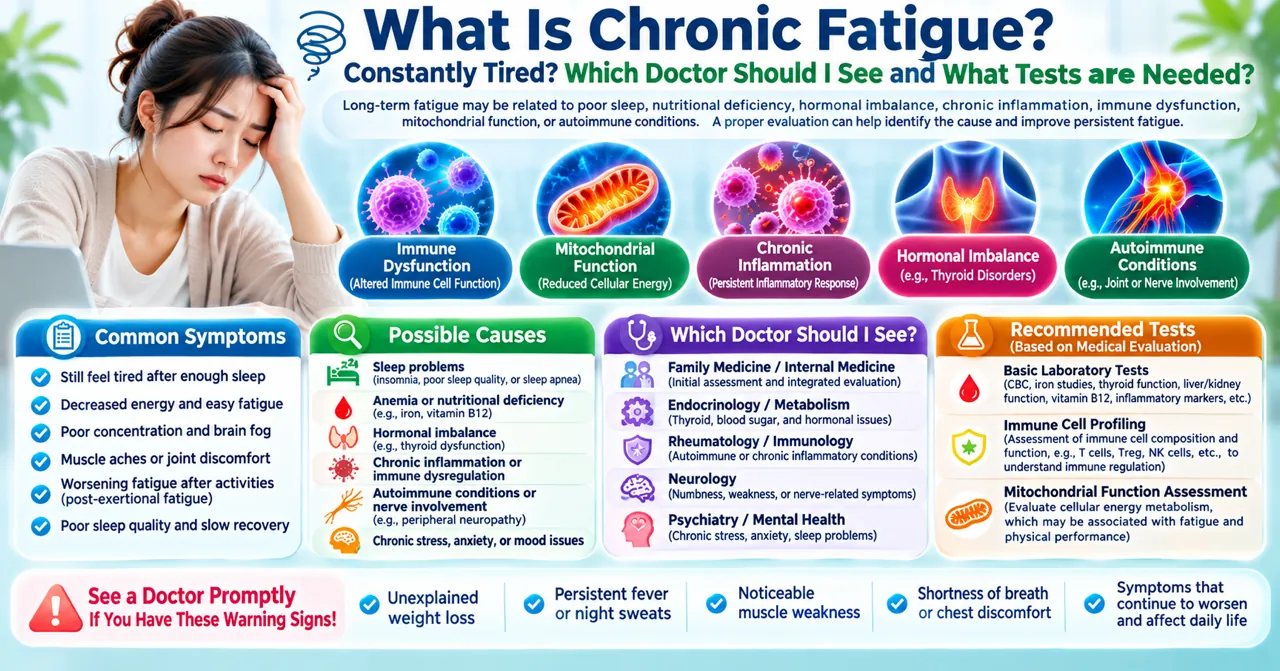
- Chronic fatigue refers to tiredness that lasts a long time, keeps coming back and may even affect daily life, and that may not be adequately relieved by normal rest or sleep; long-term fatigue is not the same as chronic fatigue syndrome (ME/CFS).
- Long-term fatigue may be related to sleep disorders, anaemia and nutritional deficiencies, thyroid and endocrine abnormalities, chronic inflammation, autoimmune diseases, emotional stress or other chronic conditions; it cannot be attributed only to stress or to abnormal function of a single type of cell.
- When the cause is unclear, you can usually start with family medicine or general internal medicine, and then decide whether a referral to another specialty is needed based on your symptoms and the results of initial tests.
- Testing usually starts with your history, a physical examination and basic blood and biochemistry tests; neither immune cell subset analysis nor mitochondrial function-related testing can determine the cause of fatigue on its own.
- Seek medical care early if fatigue comes with unexplained weight loss, persistent fever, night sweats or marked breathlessness on exertion; chest pain, severe difficulty breathing, fainting or changes in consciousness need emergency care immediately.
Contents
- What is chronic fatigue? How is it different from ordinary tiredness?
- What are the common symptoms of chronic fatigue?
- What causes may be related to long-term fatigue?
- Which doctor should you see if you are always tired?
- What tests can you have if you are always tired?
- Is chronic fatigue related to chronic inflammation and chronic pain?
- When does fatigue need prompt medical attention?
- How does Happy Clinic approach health assessment for long-term fatigue?
What is chronic fatigue? How is it different from ordinary tiredness?
Chronic fatigue refers to a state in which tiredness lasts a long time, keeps coming back and may even affect daily life; unlike ordinary tiredness, it may not be adequately relieved by normal rest or sleep.
Many people have had this experience:
You slept eight hours last night but still feel tired when you get up in the morning; after a full day at work your body feels weary and you cannot concentrate; and at the weekend, even after two days of rest, your energy has not returned to what it used to be.
Some people also have neck and shoulder pain, muscle aches, joint discomfort, headaches or poorer sleep quality.
These symptoms may be related to life stress, sleep problems, nutritional status, endocrine diseases, chronic inflammation or other physical conditions.
However, it is important to note:
Long-term fatigue is not the same as chronic fatigue syndrome.
Chronic fatigue syndrome (Myalgic Encephalomyelitis/Chronic Fatigue Syndrome, ME/CFS) is a condition that needs to be assessed against specific clinical criteria. It usually involves worsening of symptoms after activity, unrefreshing sleep, and problems such as impaired cognitive function or orthostatic intolerance.
Ordinary fatigue, long-term fatigue and ME/CFS cannot simply be treated as the same thing.
If fatigue lasts for several weeks, keeps recurring or is already affecting your work and life, it is advisable to be assessed by a doctor to look for possible causes.
What are the common symptoms of chronic fatigue?
The most common features of long-term fatigue include persistent tiredness, lack of energy even after enough sleep, reduced physical stamina, difficulty concentrating, and a reduced ability to carry out daily activities.
Different patients may have different symptoms.
1. Still tired after a full night's sleep
Even with enough sleep, you still feel tired when you get up in the morning, and tend to feel sleepy or lack energy during the day.
This may be related to sleep quality, sleep apnoea or other conditions.
2. A marked drop in physical stamina
Activities you used to manage easily now feel especially hard.
For example, you get tired more easily than before when walking, climbing stairs or doing housework.
3. Reduced concentration and memory
Some people feel that their thinking has slowed down, that they cannot concentrate, or experience what is commonly called "brain fog".
But these symptoms are not specific to chronic fatigue; they can also come from lack of sleep, emotional problems or other conditions.
4. Muscle and joint discomfort
Some patients also have muscle aches, tight neck and shoulders, or joint pain.
If there is also joint swelling, morning stiffness or other signs of inflammation, a doctor may need to assess for rheumatic and immune-related diseases.
5. Fatigue that worsens after activity
Some patients experience a marked and delayed worsening of symptoms after physical or cognitive activity, and recovery may take longer.
This worsening of symptoms after activity is one of the important clues in assessing ME/CFS, and it is different from ordinary tiredness after exercise.
If this happens, tell your doctor, and do not force yourself to increase the amount of exercise on your own.
What causes may be related to long-term fatigue?
Long-term fatigue may involve sleep, the blood, the endocrine system, nutrition, the immune system, mental health and other physical conditions, so it cannot be attributed only to stress or to abnormal function of a single type of cell.
1. Lack of sleep or sleep disorders
Not getting enough sleep, insomnia, sleep apnoea and poor sleep quality can all cause daytime tiredness.
If this comes with heavy snoring, pauses in breathing during sleep or daytime sleepiness, a sleep-related assessment should be considered.
2. Anaemia and nutritional deficiencies
Iron-deficiency anaemia, vitamin B12 deficiency and other nutritional problems may cause fatigue, weakness or reduced exercise tolerance.
A doctor will decide whether tests are needed based on your symptoms, diet and medical history.
3. Thyroid and endocrine abnormalities
An underactive thyroid (hypothyroidism) may cause fatigue, sensitivity to cold, constipation and changes in weight.
Diabetes or other endocrine diseases may also be related to tiredness.
4. Chronic inflammation and immune-related diseases
Some chronic infections, autoimmune diseases and other inflammatory conditions may come with fatigue.
During an inflammatory response the immune system releases various cytokines, and some inflammatory signals may affect feelings of fatigue, sleep and levels of physical activity.
But long-term fatigue does not on its own mean that chronic inflammation must be present in the body.
5. Autoimmune diseases and nerve function problems
Some autoimmune diseases may cause fatigue, muscle weakness, joint pain or other symptoms.
For example, lupus, rheumatoid arthritis and some autoimmune thyroid diseases may all come with fatigue.
Some immune-mediated peripheral nerve diseases, such as chronic inflammatory demyelinating polyneuropathy (CIDP), may cause weakness, numbness or abnormal sensations in the limbs.
If fatigue comes with persistent nerve symptoms, a doctor should assess whether a neurological examination is needed.
6. Emotional stress and mental health
Long-term stress, anxiety, depression and sleep problems can all affect mental and physical energy.
Physical conditions and psychological factors may also be present at the same time, so a patient's fatigue should not simply be attributed to psychological problems.
7. Other chronic conditions
Heart, lung, liver and kidney disease, as well as some cancers, may also cause persistent tiredness.
But fatigue is a highly non-specific symptom, and whether someone has cancer cannot be judged from fatigue alone.
Which doctor should you see if you are always tired?
When the cause of long-term fatigue is unclear, you can usually start with family medicine or general internal medicine, and then decide whether a referral to another specialty is needed based on your symptoms and the results of initial tests.
| Accompanying symptoms or situation | Specialties to consider |
|---|---|
| Long-term fatigue, cause unclear | Family medicine, general internal medicine |
| Sensitivity to cold, weight changes, abnormal blood sugar | Endocrinology and metabolism |
| Painful, swollen joints, morning stiffness, suspected autoimmune disease | Rheumatology and immunology |
| Long-term insomnia, low mood, anxiety | Psychiatry |
| Heavy snoring, pauses in breathing during sleep | Sleep medicine clinics, pulmonology (chest medicine) |
| Numbness or weakness in the limbs, nerve symptoms | Neurology |
| Chest tightness, breathlessness on exertion, palpitations | Family medicine, cardiology; seek care according to severity |
If you have sudden chest pain, severe difficulty breathing or other emergency symptoms, go straight to the emergency department.
What tests can you have if you are always tired?
Testing for long-term fatigue usually starts with your history, a physical examination and any necessary basic blood and biochemistry tests; a doctor then decides whether immune, neurological, sleep or other specialised assessments are needed.
Level 1: General blood and biochemistry tests
Common areas of assessment include:
| Test | Main purpose of assessment |
|---|---|
| Complete blood count (CBC) | Anaemia, abnormal blood cell counts |
| Blood glucose, glycated haemoglobin (HbA1c) | Blood sugar metabolism |
| Thyroid function (TSH, etc.) | Thyroid dysfunction |
| Liver and kidney function | Liver- and kidney-related problems |
| Ferritin and iron-related tests | Possible iron deficiency |
| Vitamin B12, etc. | Nutritional deficiencies, assessed according to medical history |
| CRP, ESR | Some inflammatory states, assessed according to symptoms |
Not every patient needs all of the tests above.
For example, CRP and ESR are non-specific markers of inflammation: abnormal values cannot directly diagnose an autoimmune disease, and normal values cannot rule out all inflammatory conditions.
Level 2: Assessments related to immune cell function
The human immune system is made up of many kinds of cells, including T cells, B cells, natural killer cells (NK cells) and other immune cells.
Different cells take part in immune defence, immune regulation and inflammatory responses.
Using techniques such as flow cytometry, it is possible to analyse the number, proportion or specific surface markers of some immune cell populations.
For example:
- CD4 and CD8 T cell populations
- Regulatory T cells (Treg)
- NK (natural killer) cells
- B cells and other immune cells
- Specific activation or differentiation markers, analysed according to the test design
But it is important to note:
Immune cell subset analysis or related function testing cannot on its own diagnose chronic fatigue, chronic inflammation, autoimmune disease or cancer.
Different tests differ in their clinical uses and the strength of their evidence.
Whether such testing is needed should be decided based on a doctor's judgement, the validation status of the testing method and actual clinical need.
Level 3: Mitochondrial function and cellular energy metabolism
Mitochondria are important organelles in cellular energy metabolism, involved in ATP production and many physiological activities of the cell.
Specific mitochondrial diseases may cause muscle weakness, poor exercise tolerance or other whole-body symptoms.
There is therefore a biological link between mitochondria and fatigue that is worth researching.
However, ordinary long-term fatigue cannot be directly equated with insufficient mitochondrial function.
Different mitochondrial testing methods measure different things, and their results may not directly reflect the body's overall energy status.
At present, mitochondrial function-related testing is not a routine diagnostic tool for all patients with long-term fatigue, and it cannot confirm the cause of fatigue on its own.
Level 4: Cancer risk and appropriate screening
Some cancers may come with fatigue, but most fatigue is not caused by cancer.
Cancer risk should be assessed based on age, family history, lifestyle, existing conditions and clinical symptoms.
For example, people who meet the eligibility criteria can arrange breast cancer, cervical cancer, bowel cancer or other appropriate screening in line with current medical guidelines.
As for emerging technologies such as circulating tumour cell (CTC) and cancer stem cell-related tests, their scope of clinical use and supporting evidence still have important limitations.
At present, these tests should not be presented as standard early cancer screening for people without symptoms, nor can they replace validated cancer screening methods.
Is chronic fatigue related to chronic inflammation and chronic pain?
Some patients with long-term fatigue may also have chronic pain or inflammation-related conditions, but the three do not necessarily share the same cause, and none of them can be used as the basis for diagnosing the others.
Chronic inflammation may come with fatigue, joint discomfort or other whole-body symptoms.
Chronic pain, in turn, may affect sleep, activity levels and mental state, further adding to feelings of tiredness.
Some autoimmune diseases may affect the joints, muscles or nerves at the same time, causing both pain and fatigue.
So when fatigue comes with long-term pain, morning stiffness, joint swelling, or numbness or weakness in the limbs, a doctor may need to assess further from the perspective of the immune system, the nervous system and other related systems.
But fatigue, pain or immune cell test results alone cannot directly determine whether a patient has an autoimmune attack.
Understanding the relationship between chronic inflammation and the immune system can help in understanding possible disease mechanisms, but an actual diagnosis still requires a full clinical assessment.
When does fatigue need prompt medical attention?
If long-term fatigue comes with unexplained weight loss, persistent fever, night sweats, marked breathlessness on exertion or other abnormal symptoms, seek medical care early to rule out conditions that need treatment.
The following situations deserve particular attention:
- Marked, unexplained weight loss
- Persistent fever or recurring night sweats
- Marked paleness, weakness or reduced exercise tolerance
- Muscle weakness that keeps getting worse
- Fatigue with markedly painful, swollen joints
- Long-term fatigue that affects work, life or basic daily activities
If you have chest pain, severe difficulty breathing, fainting, changes in consciousness or sudden abnormal nerve function, seek emergency care immediately.
How does Happy Clinic approach health assessment for long-term fatigue?
Happy Clinic places importance on understanding the issues that may be involved in long-term fatigue from your personal medical history, lifestyle, physical function and relevant health indicators, with a doctor assessing appropriate tests and the direction of further care.
The causes of long-term fatigue may involve several body systems.
From the perspective of preventive medicine and personalised health management, as well as paying attention to sleep, nutrition, exercise, stress and chronic conditions, you can also, according to your own needs, learn about research and testing information related to immune cell function and mitochondrial energy metabolism.
Happy Clinic focuses on immune health, cellular function and personalised health management, and aims to help people understand their physical condition in a more systematic way.
But all tests should be interpreted according to their actual purpose, the scientific evidence and their clinical applicability.
If an autoimmune disease, neurological disease, endocrine abnormality or other condition is suspected, further diagnosis should be made by the appropriate specialty.
Long-term fatigue should not be dismissed as simply overwork, nor does it mean that a serious illness is necessarily present. What matters is understanding your symptoms, recognising warning signs and choosing an evidence-based approach to assessment.
Medical note: This article provides general health education information and cannot replace a doctor's diagnosis and treatment. The clinical uses of immune cell and mitochondria-related tests must be judged according to the actual testing method, validation results and a doctor's assessment.
FAQ
Which doctor should I see if I am always tired?
If the cause of long-term fatigue is unclear, you can start with family medicine or general internal medicine. A doctor will assess, based on your symptoms, medical history and the results of initial tests, whether a referral to endocrinology and metabolism, rheumatology and immunology, neurology, a sleep medicine clinic or another specialty is needed.
I still feel tired after a full night's sleep. Does that mean something is wrong with my body?
Not necessarily. Feeling tired after enough sleep may be related to poor sleep quality, sleep apnoea, anaemia, thyroid abnormalities, emotional stress or other conditions. If it lasts for several weeks or is already affecting daily life, it is advisable to be assessed by a doctor.
What blood tests are needed for chronic fatigue?
Depending on your symptoms, a doctor may arrange a complete blood count, blood glucose, thyroid function, liver and kidney function, and any necessary nutrition- or inflammation-related tests. Not every patient needs all of these tests; they should be chosen according to your medical history and clinical need.
Can I take health supplements on my own when I feel fatigued?
It is not advisable to take large amounts of specific health supplements over a long period before the cause is understood. If you do have iron deficiency, vitamin B12 deficiency or another nutritional problem, a doctor or nutrition professional can assess the appropriate way to supplement. Health supplements cannot replace the diagnosis and treatment of disease.
Is long-term fatigue related to chronic inflammation?
Some chronic inflammatory or autoimmune diseases may come with fatigue, but long-term fatigue does not necessarily mean chronic inflammation is present. This needs to be judged by combining symptoms, a physical examination and appropriate tests.
Can immune cell testing find the cause of chronic fatigue?
Immune cell testing can analyse specific immune cell populations or markers, but it cannot on its own diagnose the cause of chronic fatigue. Whether it has clinical use depends on the test items, their validation status and the patient's actual medical needs.
Can mitochondrial function testing tell me why I am always tired?
Mitochondria are involved in cellular energy metabolism, and some specific diseases are related to abnormal mitochondrial function. But the cause of ordinary long-term fatigue cannot be determined by mitochondrial function testing alone, and its results cannot replace a routine medical assessment.
Happy Clinic and Neogenesis Biotech work together in the same building
Happy Clinic (3rd floor) and Neogenesis Biotech (4th floor) share a building in Zhongshan District, Taipei, and work closely together on research and clinical care.
- Neogenesis Biotech: research in cell technology, precision testing and regenerative medicine
- Happy Clinic: clinical health assessment, medical consultation and health management
- Whether a test is suitable needs to be assessed by a doctor based on your individual health
More in Health Testing
Keep reading on related topics